newYou can now listen to Fox News articles.
artificial intelligence We are leaving a mark on the future of cancer treatment.
One of the latest applications of this technology is to pinpoint hard-to-detect locations. breast cancer.
Researchers at The Ohio State University Comprehensive Cancer Center – Arthur G. James Cancer Hospital and Richard J. Solove Institute are using AI in a preliminary setting to predict which patients are likely to develop lobular breast cancer.
Woman overcomes deadly brain cancer with experimental stem cell therapy: ‘Absolutely amazing’
What is lobular breast cancer?
breast cancer It is the most common cancer in women and the second leading cause of cancer-related death in the country.
Data shows that lobular breast cancer, which is aggressive and difficult to detect, accounts for 10% to 15% of breast cancer diagnoses in the United States.
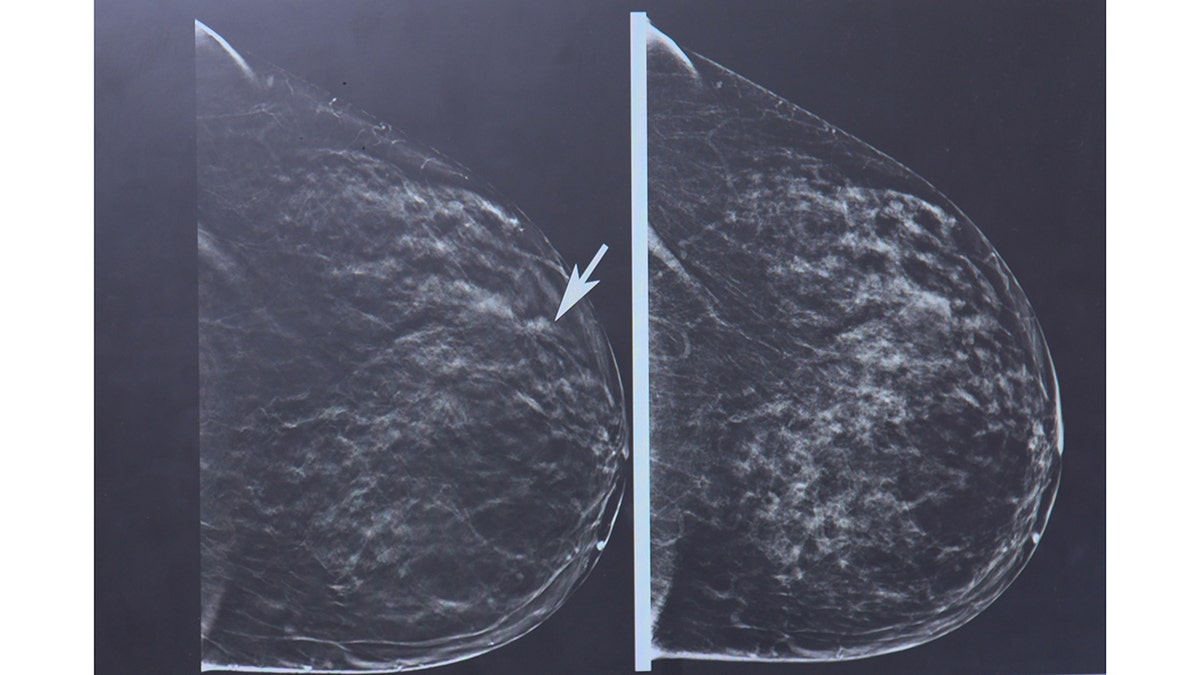
This is how lobular breast cancer appears on a mammogram. Dr. Alia Roy noticed that the images were cloudy, prompting her to recommend further scans. (Ohio State University)
Lobular cancer does not grow as a mass of cells that form a tumor, but as long chains of cells, so it appears as a “subtle thickness” on mammography. OSU says this means it can be difficult to detect until it has spread to other parts of the body.
This form of the disease is at risk of recurrence even 10 years after a patient has cancer.
“We urgently need better tools to predict which patients are truly at high risk.”
Furthermore, approximately 40% Women over 40 years old According to the Society of Breast Imaging, these people have dense breast tissue that can be more difficult to detect and increase the risk of developing breast cancer.
Although invasive lobular carcinoma grows, spreads, and responds to treatment differently than the more common invasive ductal carcinoma, oncologists still follow the same guidelines for both diseases, according to Dr. Arya Roy, breast cancer expert and principal investigator at OSUCCC – James.
CLICK HERE TO GET THE FOX NEWS APP
“The genomic tests we currently use often yield unclear or conflicting results for lobular cancer, making it difficult for oncologists to determine the best treatment,” she said in a press release. “We urgently need better tools specifically for lobular cancer that can predict which patients are truly at high risk.”
Technology to fight cancer
Roy reiterated how difficult it is to identify lobular breast cancer from images.
“At the same time, it’s very difficult to identify patients who are at high risk of recurrence after treatment,” she told FOX News Digital. “So, this is what we use.” artificial intelligence technology This is to identify patients who are at risk of having this cancer come back. ”
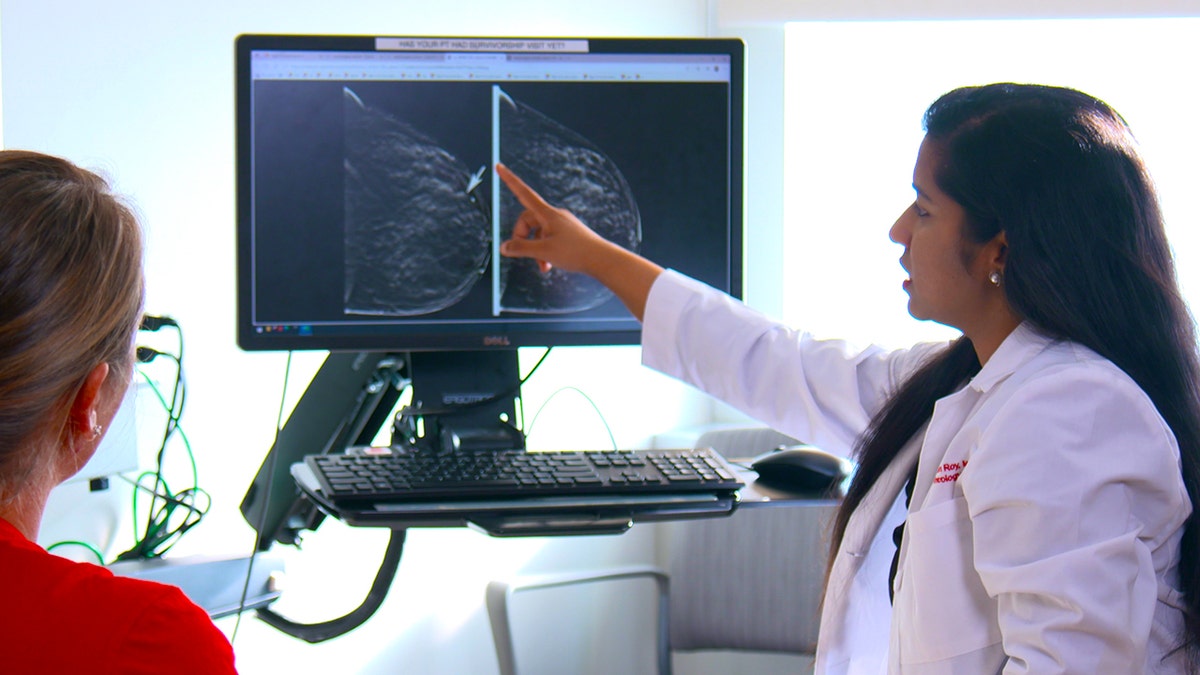
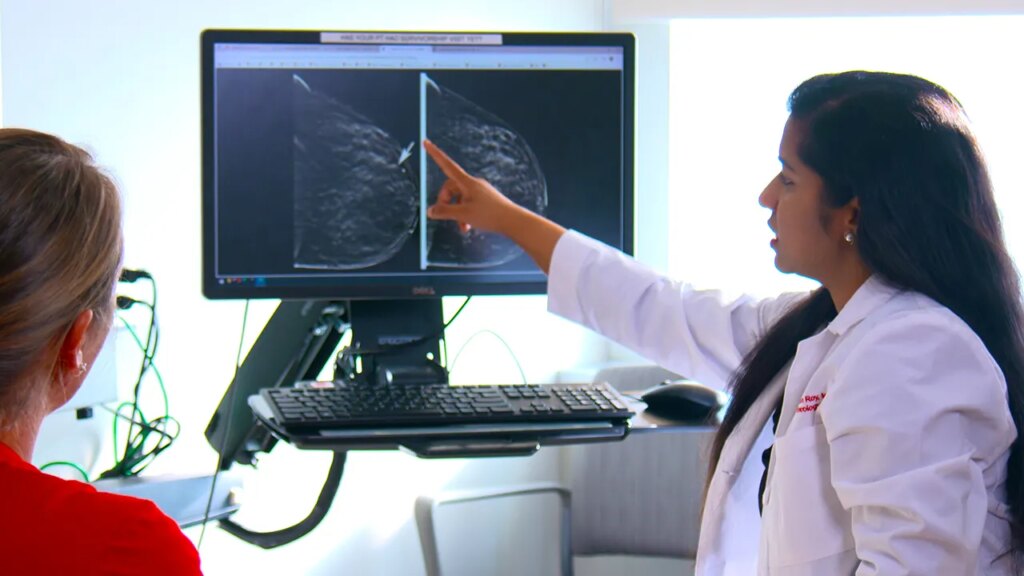
Dr. Alia Roy, who examines breast scans, studies a type of cancer that is often missed by routine screenings. She uses data from real lobular breast cancer cases to train artificial intelligence to improve early detection. (Ohio State University)
By combining AI models with digital pathology images, doctors can detect biomarkers and other indicators in high-risk cancer patients. Researchers say these findings, along with patients’ clinical data, will be used to create a scoring system that predicts the likelihood of cancer recurrence over the next 10 years.
AI tools are currently under development. clinical trial And funded research is on the horizon.
Click here to sign up for our health newsletter
“Once fully developed, we hope that this artificial intelligence tool to help identify patients at risk of recurrence will be available for use in all patients with lobular breast cancer,” Roy continued.
“If we know that a patient’s cancer has a 10% chance of coming back within five years, we can keep them in the hospital.” strict surveillance. ”
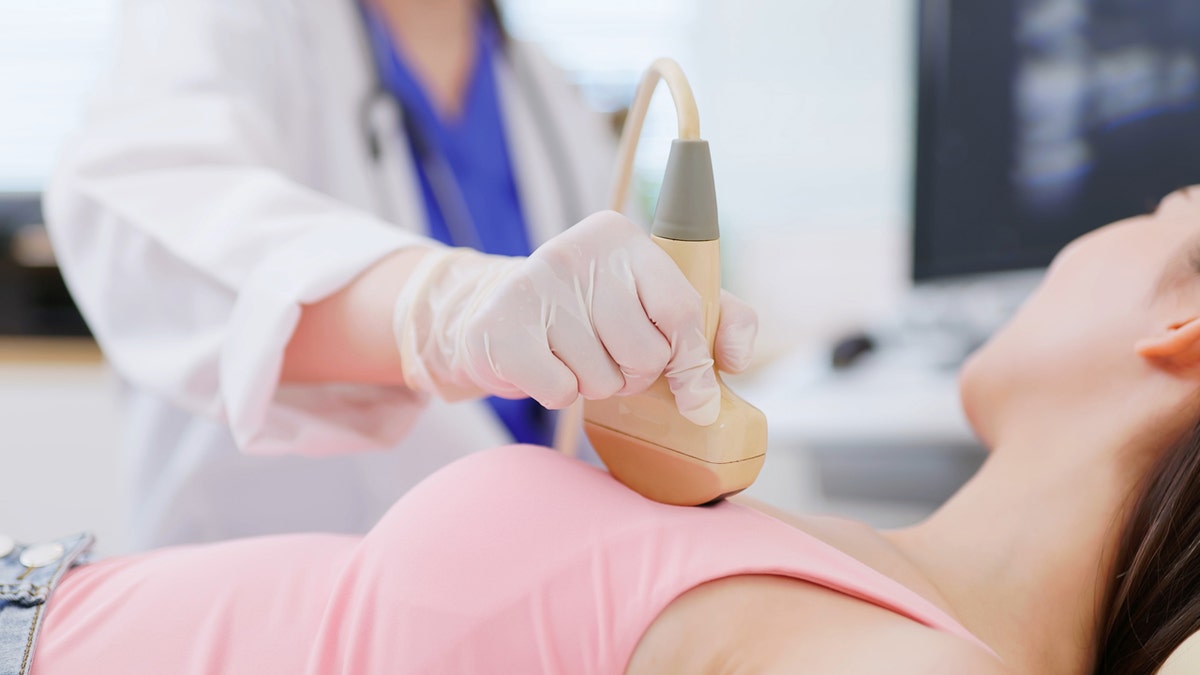
The study’s researchers encourage women to discuss with their doctors whether additional imaging is right for them. (St. Petersburg)
Oncologists can also use other methods imaging technology To ensure cancer recurrence does not go unnoticed in these high-risk patients, Roy added, this new AI-driven method could “give hope to many patients.”
Oncologists encourage women to talk with their doctors about whether additional imaging is appropriate.
Potential limitations
Dr. Harvey Castro, a Texas ER doctor and AI expert who was not involved in the OSU study, commented on the findings to Fox News Digital.
Test yourself with our latest lifestyle quiz
“While the Ohio State study represents an important advance in leveraging AI to detect lobular breast cancer, a notoriously difficult subtype, it also highlights obstacles that still prevent AI from fully matching the complexities of the real world,” he said.
One of the biggest problems, the doctor noted, is training AI on old data. “Medicine is evolving rapidly, and algorithms built on yesterday’s images can miss today’s patterns. This is what I call temporal drift.”
“We need to ensure that these tools are tested in a diverse population in the real world before they are introduced into daily practice.”
Castro warned that many systems “work beautifully” in the lab but can stumble when tested in new clinics and hospitals. patient population.
“Dense breast tissue remains AI’s Achilles heel,” he noted. “The same density that hides tumors from radiologists can confuse algorithms, especially among racial and age groups.”
For more health stories, click here
According to Castro, AI will not replace radiologists, but rather redefine the way radiologists work.
“But before these tools arrived, daily careYou need to make sure that you have not just perfect laboratory data, but that it has been tested on a diverse population in the real world. ”